

By the team at Riding the Wake
With a loosely-managed sport like paddling, there are bound to be strange jargony phrases and acronyms that crop up. When I was learning about the sport, these acronyms befuddled me. Here is what I have learned. If you have suggestions on edits, additions, or changes, please leave a comment and we’ll do our best to keep this list alive for the long course.
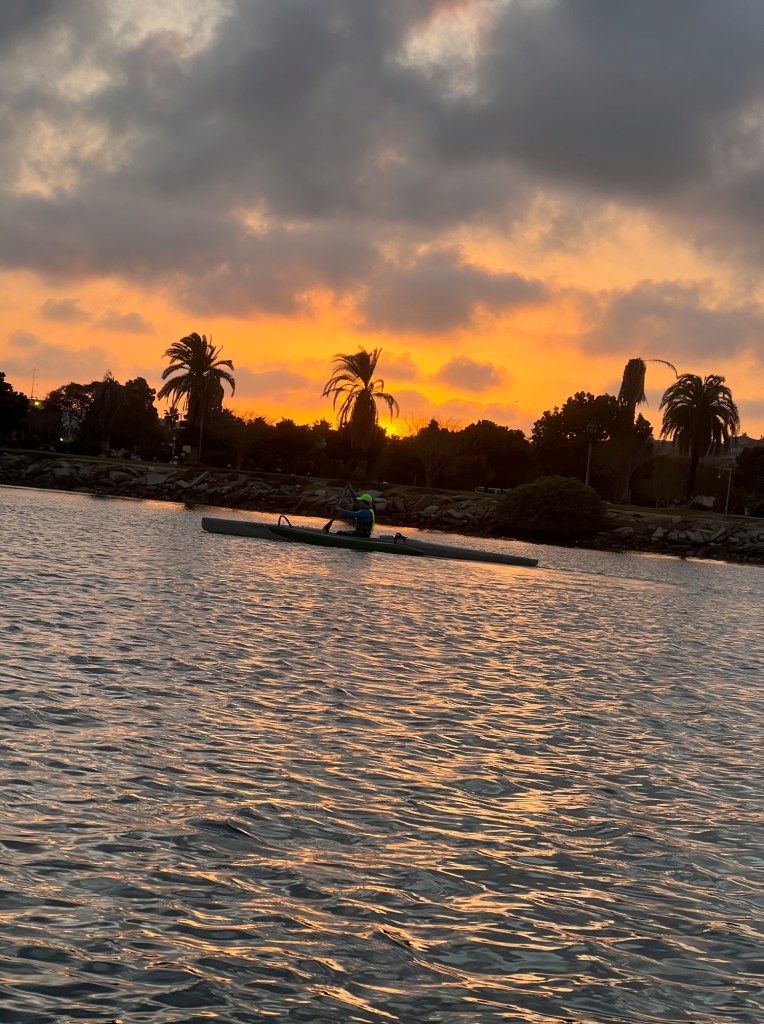
Important note: this acronym list isn’t designed to be a comprehensive list or explanation of all paddlesports craft, but rather a helping hand for those newer to the sport who may see or hear acronyms or jargon they have never encountered before, or who may be signing up for a race and wondering what the common designations mean. We hope this also helps inspire paddlers to try out new watercraft and do some cross-training!
General terms
TT = time trial
Watercraft types
- C, C1, C2 = High-kneel canoe, and the number of paddlers
- A canoe paddled with a single-bladed paddle while kneeling on one knee.
- DB = Dragon Boat
- There are different numbers of seats on a dragonboat, so a dragon boat with 10 bench seats for 20 paddlers (plus a drummer and steersperson) is a 20-seat boat, and a 5 bench boat is a 10-seat boat. Two paddlers share each bench.
- K, K1, K2, K3 = Kayak, and the number of paddlers
- A sprinting kayak, paddled with a double-bladed paddle.
- OC, OC1, OC2 = Outrigger canoe, and the number of paddlers
- A thin canoe with a rudder and an outrigger or “ama” attached that helps stabilize the craft through its weight and buoyancy. OC paddlers use a paddle with a single blade. The number following “OC#” is the count of people in the outrigger canoe, respectively.
- OC6 = Outrigger canoe (rudderless), and the number of paddlers
- A long 6-seat canoe with benches for each paddler, an “ama” (see OC description), but no rudder. The last paddler is also the steersperson, similar to a V1.
- Prone = Prone paddle board
- Designed somewhat in-between a SUP and a surfboard, riders paddle with their hands while laying prone or kneeling (and do not use a paddle).
- SKI = SurfSki
- Similar to a K1 kayak, but designed with an open cockpit, and which helps with paddling in the ocean. Paddles have a double blade.
- SUP = Stand-up paddle board
- Usually pronounced “sup,” which rhymes with “pup,” paddlers use a long-handled paddle with a single blade. Multiple paddlers may use a single SUP, but this is uncommon so there are typically no numbers associated with the SUP designation for races.
- V, V1, V3 = Va’a, and the number of paddlers
- Like an OC, the V1 has an ama, but unlike an OC, there is no rudder, and consequently no foot pedals, so the paddler must steer with their body weight and connection to the water with the paddle. Some elements of steering are similar to an OC6
Age brackets
U14, U16, U19 = Age-and-under. Think of this as 14-and-under, not under-14. For example: if the race brackets are U14, U16, and U19, and there are paddlers with ages 13, 14, 15, 16, 17, this is how it would shake out:
- 13 = U13
- 14 = U14
- 15 = U16
- 16 = U16
- 17 = U19
Open = ages 20-39. The most competitive age bracket in most races.
Masters 40+, Senior Masters 50+, Golden Masters 60+ = The marked age and above, until you get to the next age bracket. Don’t be intimidated by the “Masters” designations, they are merely an honorary title given to paddlers competing in these age brackets. The fastest paddlers will typically be those competing in the Open age brackets. Older paddlers may be brand new to the sport or 30-year veterans, but in most community races all are welcome to compete. Obviously, invitationals and races with qualifiers would be an exception.
Gender brackets
Mixed = a watercraft with at least 2 seats with a mixed-gender crew. There may be specific rules of the number of each gender for each race if there are longer boats, such as in dragon boat competition.
Non-binary or transgender policies: Generally no selection option is given for those identifying as non-binary or transgender for competitions or races. Unless you’re a professional or there are specific rules for competition, we here at Lazy Paddler recommend choosing the gender that you identify as, or are most comfortable competing with, because it’ll be on the scoreboard for a while, and you should be proud of your placements and times. If you are going to be training for professional competitions, competitive crew teams, or national teams, please check their rules in advance so you know what the requirements and time trial limits are, as they do vary by gender.
 Lazy Paddler
Leave a comment